Monday, April 27, 2009

Inequality

You know when you're browsing through the TV channels and you find something interesting on BBC Parliament (I know, always), well today there was coverage of the House of Lords second reading on the companies remuneration reports bill (caps on chief executive salaries, fairness in society, that sort of thing, the text of it is well worth a read). Although it's not hugely relevant to energy policy, there were some rather interesting arguments involved, one of the main ones being that relative inequality in society holds a strong correlation to its problems. There was a review in the Guardian (12th March) on a book called The Spirit Level: Why More Equal Societies Almost Always Do Better which was very interesting because of its fundamental analysis and now it's been mentioned further I might go rash and buy it.

Some of the highlights are details of the relative earnings between CEOs and average earners. Decades ago it was in the ball park of 10-1 and in Scandinavian countries (ranking top in Unicef wellbeing tables) the current figure is very similar, likewise Japan. Whereas USA, UK etc. that figure, in some cases, is in the several hundreds (interestingly the UK armed forces has a much better ratio). The idea has been that bright, creative people should be paid the market rate for their services, otherwise they would go elsewhere and society and that company would suffer.

The discussion really seems to highlight institutional problems in society. For me there seems to be three philosophies that need looking at:


  • Living within your means. Your outgoings shouldn't be more than your income but probably because of cheap credit, many people on the street bought and consumed more with little long term thought. Companies too seemed to get greedy with derivatives this and short selling that.
  • No-one wants to leave the gravy train. Primarily to do with companies/markets, that while the going is good, no-one wants to be the spoilsport. Companies fear they would lose ground to competitors and risk losing more money or getting taken over. Governments make more money when the going is good, enjoy the publicity of a healthy economy and fear the public backlash if it's found their regulations have caused this. In effect, jumping off a cliff holding hands.
  • That society can effectively be dragged along on the tailcoats of the rich. This has been a fundamental Government philosophy for some time now, that the successful few provide extra crumbs for the rest of society to feed off. I'd guess it's why Governments have been so reluctant to sort out tax havens etc, in the belief that if they are taxed the same as the rest of the population, they will go elsewhere and everyone loses a little.

But this recession and in the statistics mentioned in Spirit level, appear to have proven that these beliefs are mostly a fallacy, based on greed, irresponsible risk taking and short-termism.

I really do recommend reading the transcript linked above, it's much better written than this blog if nothing else.

Thursday, April 23, 2009

Note to self

I am a white British male, born into a middle class family and in nearly all factors of life, this is luckier than winning the lottery. I'd consider it a moral responsibility not to waste the potential I have by passing away the time or playing it safe.

Feel free to beat me over the head with this post whenever I lose sight of this.

Wednesday, April 22, 2009

So the scrappage scheme...

I'll forego the rest of the budget, at least for the time being, and look at the car scrappage scheme (covered here, here and lots here)

In order to help the car industry and retail trade, I can announce that a scrappage scheme will be implemented next month.

It will provide motorists with a £2,000 discount on new vehicles bought when they trade in cars over ten years old.

It will be a time-limited scheme until March 2010. My Right Honourable Friend the Secretary of State for Business will announce details shortly.


Sounds good surely? Newer models should be more efficient and therefore have less emissions and the motor industry gets a large boost. Except (as in the articles I linked to above) it's full of more holes than a block of swiss cheese.

  • Although the full details are published yet, there seems to be no enforcement that the car must be more efficient than the previous one (people tend to upgrade to a more powerful car when they buy a new one)
  • If the car is more efficient, the rebound effect means some of the savings (hard to place figures, UKERC suggest 50%) is lost as people drive more
  • 80% or so of cars sold in Britain come from abroad, so the boost to British jobs is greatly reduced
  • The cost in manufacturing the car isn't considered (defra link here suggests it's 10% of the lifetime emissions based on 10,000 miles per year for 13 years)
  • It seems that the traded car is scrapped regardless of how roadworthy it is
  • If the Government offers £2000 off, dealers may well reduce the discounts on their cars, reducing the benefit to consumers (who also still need to find £10000 or whatever
  • It (arguably) continues to subsidise a bloated and environmentally damaging sector
  • It continues to promote a message to the public that energy usage and climate change will have no impact on the way people can live and that the Government can still meet its legally binding emissions targets even with these policies
  • No mention of funding or promotion for public transport/cycling/walking
  • There might be more but that'll do for now

It's like trying to solve fuel poverty by burning money directly, yes it works, but it's hard to think of a more inefficient way of doing it.

Tuesday, April 21, 2009

Market knows best... but needs a hand sometimes

Thanks to Bridget for showing me this article in The Independent yesterday: Market forces must make way for interventionism, says Mandelson

(Strangely the Guardian's view on this story was little to do with a fundamental change in Government outlook, rather on the various "extra £2 billion on this and 3.5% decrease here".)

But anyway quotage time:

The document insists the Government will not "pick winners", opt for state ownership of industry, "override market forces or ignore market signals". Its new activism "does not imply a fundamental change in our view of the relationship between the market and the state.... However, the way the Government sees its own role in the market needs to change in order to deliver a more coherent and effective approach." This means "a readiness to intervene where necessary" by "supplementing" rather than "substituting itself for the market" and "correcting significant market failures."

...

While not denying Britain "the huge benefits of free enterprise," the Government recognises that the private sector "has important limits."


Typically Government opinion (and the directives of most regulators) has been to promote above all else, competition, in the belief that it is the most efficient method of production and as such the best method for increasing growth and reducing inequality in society. It may or may not be the best method, but the argument that Government can choose not to 'pick winners' seems inherently flawed. The Government creates the laws
governing society and so creates the field in which the market operates, directly or indirectly this influences different aspects. For example for selling electricity on the market. Agreements between sellers and consumers are sorted out an hour before delivery and failure to supply the agreed amount results in having to pay for that shortfall to come from elsewhere, plus extras (even supplying a surplus can cost money). This is obviously a rather big drawback to many renewable energy sources who cannot guarantee their supply in an hours time.

There's nothing concrete on what the Government will do from now on so we shouldn't get carried away believing this is a paradigm shift, it's not improbable that this is merely substanceless spin based on a knee-jerk reaction to public opinion (although in fairness I don't recall seeing too many calls for more intervention or nationalisation). Nevertheless the act of saying this does represent a somewhat significant moment, even if it only meant badly needed extra financing during the recession for renewable energy etc.

Tuesday, April 14, 2009

Peak Oil again

Is peak oil a problem? Well the Government don't seem to think so, based on a Freedom of Information request by George Monbiot. (Don't worry, his articles won't feature in every one of my blogs, he can get slightly idealistic) The article highlights the stark differences in Government views on risk, between openly encouraging bankers to thorough assessments on smallpox. Reading some of the comments at the bottom of the article, I think it's important to point out Monbiot wasn't criticising the expenditure on smallpox necessarily after all:

"This is what Government is for: to prepare for the worst, however unlikely it may be."

is utterly correct.

Rather he highlights the Government's inconsistent view on one topic they rate as having no current threat but which could have a devastating effect and so requires attention and investment, and other topic they
rate as having no current threat but which could have a devastating effect and so requires a head in the sand approach.

In one of his previous articles, (which upon reading again actually has very little different content) he interviewed the chief economist of the IEA, usually a rather conservative group, and he said:

"In terms of non-Opec, we are expecting that in three, four years' time the production of conventional oil will come to a plateau, and start to decline. In terms of the global picture, assuming that Opec will invest in a timely manner, global conventional oil can still continue, but we still expect that it will come around 2020 to a plateau"

Which is obviously interesting considering the Governments view:

"The government does not feel the need to hold contingency plans specifically for the eventuality of crude oil supplies peaking between now and 2020."

So the conservative viewpoint is they 'expect' oil not to peak by 2020 which the Government interprets as 100% not going to. This viewpoint seems even worse when the mentioned Hirsh report states 20 years is required to implement a mitigation crash programme.

Why does the Government not believe peak oil to be a problem? Is it because it's outside of political timescales? Is it a belief that the market will provide the solution either by more investment in discovering conventional resources or new technology to improve non-conventional extraction? Are they lying to ease any fears because of the potential impacts it would have on society
? (Think of the effect of the fuel protests in 2000 had for what was less than a week long and only a moderate campaign focused on a few key sites. People couldn't get to work, hospitals reduced their activities, schools closed, shops ran out of food. It's not hard to see that if supplies fell sharply for a prolonged period of time the chaos it might have on society. Incidentally if high fuel prices ever became a problem, the fact that UK fuel is something like 70/80% tax makes it a lot more flexible than countries with very little tax, but I guess that's not much consolation for the 99% of the rest of the time)

The truth is I don't know, only the Government does and they seem to want to keep very quiet about it. In my view this seems rather foolish, the Government should consider the real possibility of it in accordance with good practice, and if it does already, to do so openly. While the predictions of peak oil are still some time away, the disruption caused by fear and panic should be minimal and instead open discussion could help promote alternatives and convince the public of the need for change. Why delay what seems inevitable?

Monday, April 13, 2009

Is peak oil really a problem?

Following on from what I said in my last blog about that things aren't always simple, well I forgot to say something else that's crucial. Always be open to ideas, because the scientific method is based upon furthering knowledge by proving ideas wrong. Intuition isn't perfect because if it was we wouldn't need to do any research as we'd know it already, and history repeatedly proves this point.

So I found this article rather interesting because, as the author says, it's generally held that as production of commodities (primarily oil) plateaus and then falls, price will rise and rise since the demand is likely to continue increasing. He states that rather than supply constricted, prices are demand led. OPEC has spare capacity of 5% plus which tempers some price fluctuation, as well as alternative sources take up some slack as the market sorts out its equilibrium again.

It's certainly an interesting read. It's given me some new ideas, but his main argument of there not being a large and continued price increase seems to be okay only in a free market where there are suitable alternatives available and in sufficient quantities. If the fall in oil production isn't matched by increased development of alternatives to compensate (in cost and capacity), then surely prices would rise (although perhaps offset slightly as people reduce consumption where not necessary).

The author says "demand for any commodity is price-elastic" but I would disagree, at least in the case of oil. Oil is rarely used in electricity generation, rather it contributes 98% or so (page 14) to the energy used in transport, and people will usually swallow oil prices rises because of the necessity of getting to work or doing the work (food distribution etc).

The various graphs on this website make for interesting reading as well, the average price has been $20-30 a barrel depending on what timescale you look at. Maybe the peaks are merely bubbles caused for one reason or another (wars, lack of confidence in the market, commercial squabbles, temporary lack of exploration investment?) rather than a sign of long term increases.

So do we think the future is rosy and we don't need to worry about it because the market will find the solutions, or do we need to press the government to make commitments to creating sustainable alternatives?

Friday, April 10, 2009

And in the beginning...

Hello, my name is Paul Robins and I'm currently studying a masters in Energy Policy and Sustainability at the University of Exeter. This blog is for my thoughts and feelings about the energy world and its place in society. So first blog and I guess it should be a 'why'.

Energy is fundamentally crucial to humans because (in a rather dry physics definition) energy is required to do work. Whether heating your house,
powering a computer or driving your car, you require energy in some form or another. The source of all our energy is ultimately from three resources, the Sun (by far the majority), the heat created by radioactive decay deep inside the Earth (a small bit) and the tides caused by the gravitational pull of the moon (a very small bit). Arguably all of them are finite but although they may last for billions of years, the important factor for us is the finite amount of energy they supply each year,day or second. The amount of work or stuff we can do, from growing crops to generating electricity, is ultimately capped based on this amount.

Current world demand is around 16TW (tera = 10^12) while the amount of sunlight falling on the Earth is around 174PW (peta = 10^15) so it would seem our demands are four orders of magnitude less, i.e. tiny (and that doesn't include fossil fuel reserves or uranium). However it is not as simple as that. Firstly, only around half of the sun's energy reaches the surface, only around a third of which will be over land, a fraction of which is accessible, suitable or near areas of consumption and not to forget plants taking their share of the sunlight. So a rough guess (no figures, just guesstimation) is that about 1% of that energy is capturable for human use, so from being 10,000 times world demand it's now 100 times. That means current demand is 1% of renewables potential and that is a lot less wiggle room than before.

On the consumption side of things, while energy intensity and resource productivity continue to improve, worldwide demand for energy continues to increase as developing countries look to lift many of their citizens from poverty and developed ones to further their prosperity. Population has grown even greater than exponentially over the last 50 years and while this increase is predicted to slow to a maximum of around 9 billion people, there is no certainty that an unforeseen technological inve
ntion wont permit an even higher number.

Economic growth is arguably the greater factor in energy consumption, rising 3.8% annually compared to 1.2% for population and shows little sign of slowing or reaching a limit. If this 3.8% growth continued, after around 125 years our demand would breach that estimated renewables limit (fossil fuels are likely to have essentially been exhausted). Using that much energy might appear huge, but imagine 125 years ago when there were almost no cars, electricity grids were in their infancy, aeroplanes didn't exist, nor did televisions or computers and being warm in your house often meant another layer of cl
othes. 125 years also might appear to be a long time for a single person but it's a relatively short space of time in human society.

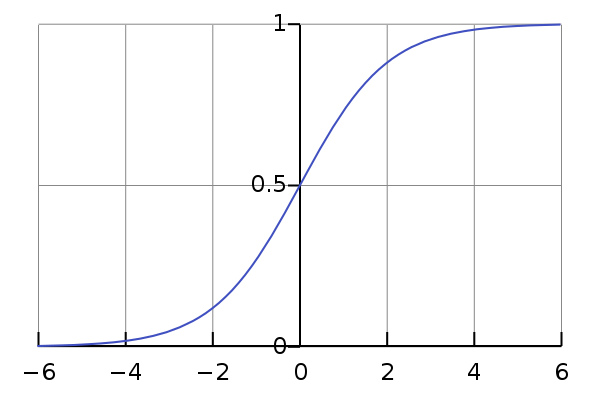
But yet again it's not as simple as that, look at this graph below, you can see the approximate exponential growth starting on the left hand side but which tapers off after time. Now cover the right side of the graph and imagine that you are making a prediction while y
ou are some point in time while the graph is still exponential, it seems obvious that the growth will continue when it every situation it will eventually reach a tipping point and start to slow down whether it's population, food yield or percentage of everyone with a mobile phone/car/computer etc. Will we reach technological/financial/social/environmental limits before physical ones in that hypothetical 125 years?


The point here is that very few things, especially energy policy, are simple and easy. One of the first and most important considerations about energy policy is understanding how widespread and complex it can be because of its fundamental role in nature and human society.