Energy is fundamentally crucial to humans because (in a rather dry physics definition) energy is required to do work. Whether heating your house, powering a computer or driving your car, you require energy in some form or another. The source of all our energy is ultimately from three resources, the Sun (by far the majority), the heat created by radioactive decay deep inside the Earth (a small bit) and the tides caused by the gravitational pull of the moon (a very small bit). Arguably all of them are finite but although they may last for billions of years, the important factor for us is the finite amount of energy they supply each year,day or second. The amount of work or stuff we can do, from growing crops to generating electricity, is ultimately capped based on this amount.
Current world demand is around 16TW (tera = 10^12) while the amount of sunlight falling on the Earth is around 174PW (peta = 10^15) so it would seem our demands are four orders of magnitude less, i.e. tiny (and that doesn't include fossil fuel reserves or uranium). However it is not as simple as that. Firstly, only around half of the sun's energy reaches the surface, only around a third of which will be over land, a fraction of which is accessible, suitable or near areas of consumption and not to forget plants taking their share of the sunlight. So a rough guess (no figures, just guesstimation) is that about 1% of that energy is capturable for human use, so from being 10,000 times world demand it's now 100 times. That means current demand is 1% of renewables potential and that is a lot less wiggle room than before.
On the consumption side of things, while energy intensity and resource productivity continue to improve, worldwide demand for energy continues to increase as developing countries look to lift many of their citizens from poverty and developed ones to further their prosperity. Population has grown even greater than exponentially over the last 50 years and while this increase is predicted to slow to a maximum of around 9 billion people, there is no certainty that an unforeseen technological invention wont permit an even higher number.
Economic growth is arguably the greater factor in energy consumption, rising 3.8% annually compared to 1.2% for population and shows little sign of slowing or reaching a limit. If this 3.8% growth continued, after around 125 years our demand would breach that estimated renewables limit (fossil fuels are likely to have essentially been exhausted). Using that much energy might appear huge, but imagine 125 years ago when there were almost no cars, electricity grids were in their infancy, aeroplanes didn't exist, nor did televisions or computers and being warm in your house often meant another layer of clothes. 125 years also might appear to be a long time for a single person but it's a relatively short space of time in human society.
But yet again it's not as simple as that, look at this graph below, you can see the approximate exponential growth starting on the left hand side but which tapers off after time. Now cover the right side of the graph and imagine that you are making a prediction while you are some point in time while the graph is still exponential, it seems obvious that the growth will continue when it every situation it will eventually reach a tipping point and start to slow down whether it's population, food yield or percentage of everyone with a mobile phone/car/computer etc. Will we reach technological/financial/social/environmental limits before physical ones in that hypothetical 125 years?
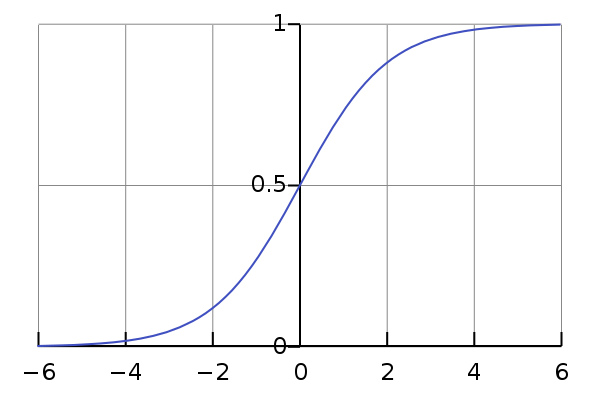
The point here is that very few things, especially energy policy, are simple and easy. One of the first and most important considerations about energy policy is understanding how widespread and complex it can be because of its fundamental role in nature and human society.


 Posts
Posts


No comments:
Post a Comment