"Energy bills 'too low' to combat climate change" is sure to be a headline that will provoke a lot of anger from many people, and for the 3 million plus in fuel poverty it's understandable. However, as the article mentions, the price of energy has been artifically low due to not including the cost of carbon. Similarly, the Government considered the extra £4 billion a year due to financial regulation changes was a product of a more efficient market/better regulations, rather than an unsustainable model (imagine being on a desert island: chopping down the trees provided you with shelter but later on you'd have no food)
It reminds you of the phrase: a bird in the hand is worth two in the bush, people have gotten used to cheaper energy, effectively subsidised by future generations, and view a return to normal levels as a cost increase. It's a hard thing to say to the public, but it is required and so measures to help those in fuel poverty should be stepped up (I'm not a fan of the Winter Fuel Allowance, I'd rather the money was spent on improving the energy efficiency of peoples homes but that's for another blog)
A lot of what was said in the article is good stuff but doesn't seem to be anything new, I'd guess that's down to a seeming lack of government action more than anything else, however, I should of course have a look at the study itself.
The Guardian is often frustrating in that regard, as it rarely has links for its content. I've spent several hours trying to find the one mentioned here for example, UCL mentions it while the closest I could get was this (incidentally that Claverton site has a lot of interesting stuff on supergrids which I'll probably mention when I get round to it.)
So yeah, expect angry radio phone-ins and letters to the Daily Mail, but the reality of the situation needs to be accepted for solutions to be created.
Showing posts with label Energy. Show all posts
Showing posts with label Energy. Show all posts
Monday, June 29, 2009


Tuesday, June 02, 2009
Coal vs Nuclear
This is something I've been thinking since I started studying energy policy and it's one I'm still not sure about.
It's hoped - but increasingly not expected - that renewables will contribute significantly towards electricity generation by 2020 (target of 15% of energy, meaning around 30-40% of electricity). This still leaves the majority of electricity to come from other sources. Bearing in mind the lifespan of conventional plants (40-60 years depending on the type) and the need to reduce energy use emissions by 80% by 2050, these sources are going to need to be as low carbon as possible - ideally now, definitely then.
Gas (anyone else think very little has been said about gas recently, except for a little bit when Milford Haven LNG imports started in march?) is likely to continue to be a major source, but as we depend on imports more and more, it seems unwise to continue having it as the primary source of generation when its supply will probably be minimal as we near 2050. Fusion shouldn't be part of any plans, considering it has not been proved viable on a large scale yet - absolutely research and investment should continue, just it shouldn't be the basis of any sort of plan while it's nowhere near completion. Which leaves nuclear (fission) and coal (with CCS)
It's something that seems as a "lesser of two evils" kind of problem, and my preference has switched on more than one occasion as you learn more about each.
Both coal and nuclear are parts of a centralised system, whereas (most) renewables can be centralised or decentralised. While decentralised is potentially the preferable option (in some ways greater energy security, individuals more likely to be energy aware - helping demand reduction and other efforts) it is not a crucial aspect, e.g. consumers want cheapest energy and governments want secure supplies regardless of centralisation.
Coal:
There are large deposits of coal in many developing countries, providing them with a cheap, secure and long term source of energy with which to develop, which is why many countries are planning an expansion in their coal generation. But coal is one of the most carbon intense fuels around and so a huge contributor to climate change. These countries see solving poverty/hunger/disease etc as more important than the environment and that increased energy use - coal or not - will let them mitigate and adapt to climate change better than otherwise. I'm not sure I agree
with the strategy of making the problem worse before you fix it (as well as the assumption it can be fixed later on) but regardless, there is a moral obligation of sorts for the developed countries to help developing ones, as not only does it benefit the progression of their society, but reduces the danger of climate change to everyone, including the developed countries.
This help obviously takes the form of carbon capture and storage, simply capturing the carbon dioxide and piping it into holes deep in the ground (usually). Trouble is, it hasn't been fully demonstrated yet, it's likely to cost a fair amount (the government is spending billions on full scale tests), it reduces the efficiency of a plant, it doesn't capture all of the carbon dioxide, and then there's the whole legal, technical and ethical minefield of storage. Some sites may cross national boundaries; how secure is it; how is it monitored; who is responsible if it leaks after 30 years etc. But humans are rather ingenious and could likely solve many of these problems, some might not get solved as well as hoped, but nothing is perfect and considering the threat of climate change, perhaps it's needed regardless of the drawbacks.
Which brings me onto nuclear.
There are a lot of people who dislike of nuclear, and that's because there's a lot to dislike, Chernobyl, nuclear weapons and so on, but there are some misconceptions for and against nuclear to be wary of. Historically coal has been more deadly and environmentally damaging than nuclear due to mountaintop removal mining, local pollution problems, heavy metals, ash tailings and so on. Nuclear is not 100% full proof but nor is it ready to blow at any second. It is however expensive, barely a week goes by without mention of the new plant in Finland costing twice the estimate and years late, or how the industry. It is currently intrinsically linked with nuclear weapons.
Require baseload?
Need infrastructure as well in developing countries? e.g. straight to mobile phones in africa, no landlines
Proliferation risk comes from enrichment/reprocessing - use world nuclear fuel bank when exporting tech?
Capital costs greater than coal/gas, difficulty getting finance, premium on finance because of risk/delays - http://blogs.wsj.com/environmentalcapital/2009/05/20/nuclear-revival-still-on-hold-mit-study-says/
http://www.guardian.co.uk/business/2009/jun/19/eon-chief-paul-golby-interview smart man, various interesting arguments to cover
CCS costs more than cost of carbon - http://www.publications.parliament.uk/pa/cm200708/cmselect/cmenvaud/654/654.pdf
So just like coal it's a question of is it needed so bad that it's worth the drawbacks. I'd have say yes, but I would still much rather see more renewables instead. If you want a nuclear dominated future, you're going to need tens of gigawatts of energy storage solutions because of the day to day variation in demand. But if you're building so much energy storage then that takes away one of the biggest problems of renewables.
To be finished and references put in asap
Friday, April 10, 2009
And in the beginning...
Hello, my name is Paul Robins and I'm currently studying a masters in Energy Policy and Sustainability at the University of Exeter. This blog is for my thoughts and feelings about the energy world and its place in society. So first blog and I guess it should be a 'why'.
Energy is fundamentally crucial to humans because (in a rather dry physics definition) energy is required to do work. Whether heating your house, powering a computer or driving your car, you require energy in some form or another. The source of all our energy is ultimately from three resources, the Sun (by far the majority), the heat created by radioactive decay deep inside the Earth (a small bit) and the tides caused by the gravitational pull of the moon (a very small bit). Arguably all of them are finite but although they may last for billions of years, the important factor for us is the finite amount of energy they supply each year,day or second. The amount of work or stuff we can do, from growing crops to generating electricity, is ultimately capped based on this amount.
Current world demand is around 16TW (tera = 10^12) while the amount of sunlight falling on the Earth is around 174PW (peta = 10^15) so it would seem our demands are four orders of magnitude less, i.e. tiny (and that doesn't include fossil fuel reserves or uranium). However it is not as simple as that. Firstly, only around half of the sun's energy reaches the surface, only around a third of which will be over land, a fraction of which is accessible, suitable or near areas of consumption and not to forget plants taking their share of the sunlight. So a rough guess (no figures, just guesstimation) is that about 1% of that energy is capturable for human use, so from being 10,000 times world demand it's now 100 times. That means current demand is 1% of renewables potential and that is a lot less wiggle room than before.
On the consumption side of things, while energy intensity and resource productivity continue to improve, worldwide demand for energy continues to increase as developing countries look to lift many of their citizens from poverty and developed ones to further their prosperity. Population has grown even greater than exponentially over the last 50 years and while this increase is predicted to slow to a maximum of around 9 billion people, there is no certainty that an unforeseen technological invention wont permit an even higher number.
Economic growth is arguably the greater factor in energy consumption, rising 3.8% annually compared to 1.2% for population and shows little sign of slowing or reaching a limit. If this 3.8% growth continued, after around 125 years our demand would breach that estimated renewables limit (fossil fuels are likely to have essentially been exhausted). Using that much energy might appear huge, but imagine 125 years ago when there were almost no cars, electricity grids were in their infancy, aeroplanes didn't exist, nor did televisions or computers and being warm in your house often meant another layer of clothes. 125 years also might appear to be a long time for a single person but it's a relatively short space of time in human society.
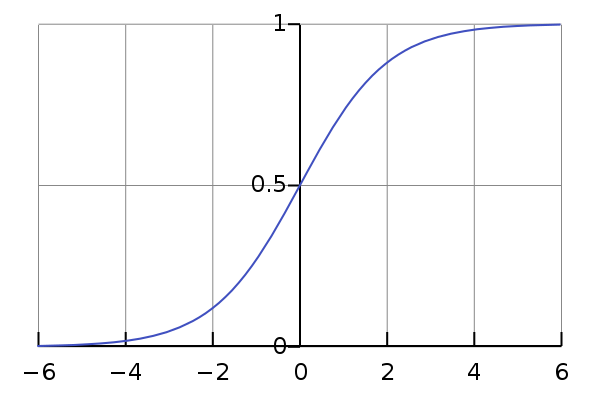
But yet again it's not as simple as that, look at this graph below, you can see the approximate exponential growth starting on the left hand side but which tapers off after time. Now cover the right side of the graph and imagine that you are making a prediction while you are some point in time while the graph is still exponential, it seems obvious that the growth will continue when it every situation it will eventually reach a tipping point and start to slow down whether it's population, food yield or percentage of everyone with a mobile phone/car/computer etc. Will we reach technological/financial/social/environmental limits before physical ones in that hypothetical 125 years?

The point here is that very few things, especially energy policy, are simple and easy. One of the first and most important considerations about energy policy is understanding how widespread and complex it can be because of its fundamental role in nature and human society.
Energy is fundamentally crucial to humans because (in a rather dry physics definition) energy is required to do work. Whether heating your house, powering a computer or driving your car, you require energy in some form or another. The source of all our energy is ultimately from three resources, the Sun (by far the majority), the heat created by radioactive decay deep inside the Earth (a small bit) and the tides caused by the gravitational pull of the moon (a very small bit). Arguably all of them are finite but although they may last for billions of years, the important factor for us is the finite amount of energy they supply each year,day or second. The amount of work or stuff we can do, from growing crops to generating electricity, is ultimately capped based on this amount.
Current world demand is around 16TW (tera = 10^12) while the amount of sunlight falling on the Earth is around 174PW (peta = 10^15) so it would seem our demands are four orders of magnitude less, i.e. tiny (and that doesn't include fossil fuel reserves or uranium). However it is not as simple as that. Firstly, only around half of the sun's energy reaches the surface, only around a third of which will be over land, a fraction of which is accessible, suitable or near areas of consumption and not to forget plants taking their share of the sunlight. So a rough guess (no figures, just guesstimation) is that about 1% of that energy is capturable for human use, so from being 10,000 times world demand it's now 100 times. That means current demand is 1% of renewables potential and that is a lot less wiggle room than before.
On the consumption side of things, while energy intensity and resource productivity continue to improve, worldwide demand for energy continues to increase as developing countries look to lift many of their citizens from poverty and developed ones to further their prosperity. Population has grown even greater than exponentially over the last 50 years and while this increase is predicted to slow to a maximum of around 9 billion people, there is no certainty that an unforeseen technological invention wont permit an even higher number.
Economic growth is arguably the greater factor in energy consumption, rising 3.8% annually compared to 1.2% for population and shows little sign of slowing or reaching a limit. If this 3.8% growth continued, after around 125 years our demand would breach that estimated renewables limit (fossil fuels are likely to have essentially been exhausted). Using that much energy might appear huge, but imagine 125 years ago when there were almost no cars, electricity grids were in their infancy, aeroplanes didn't exist, nor did televisions or computers and being warm in your house often meant another layer of clothes. 125 years also might appear to be a long time for a single person but it's a relatively short space of time in human society.
But yet again it's not as simple as that, look at this graph below, you can see the approximate exponential growth starting on the left hand side but which tapers off after time. Now cover the right side of the graph and imagine that you are making a prediction while you are some point in time while the graph is still exponential, it seems obvious that the growth will continue when it every situation it will eventually reach a tipping point and start to slow down whether it's population, food yield or percentage of everyone with a mobile phone/car/computer etc. Will we reach technological/financial/social/environmental limits before physical ones in that hypothetical 125 years?
The point here is that very few things, especially energy policy, are simple and easy. One of the first and most important considerations about energy policy is understanding how widespread and complex it can be because of its fundamental role in nature and human society.
Subscribe to:
Posts (Atom)

 Posts

